

By Davi Kennedy Oliveira, a Brazilian student at the Universidad Industrial de Santander (UIS) in Bucaramanga
The idea of a nation necessarily entails a vision of the future. After all, no one knows what will become of the country whose image they are helping to shape. That image draws on familiar points of reference, of course, but above all on lived experience, usually through historical processes that assert what sets “this” country apart from “that” one and give it grounds for claiming a national identity of its own. I am hardly the best person to speak about the French or Colombian nation. In Brazil’s case, though, it seems to me that the telling, adapting and even inventing of myths and legends play a vital part in defining what it means to “be Brazilian.” I suspect much the same is true of nation-states in general. These stories serve a practical purpose. They help raise tomorrow’s adults, the future citizens of Brazil, Colombia or France, and shape the country we might like to live in when we retire. Why not?
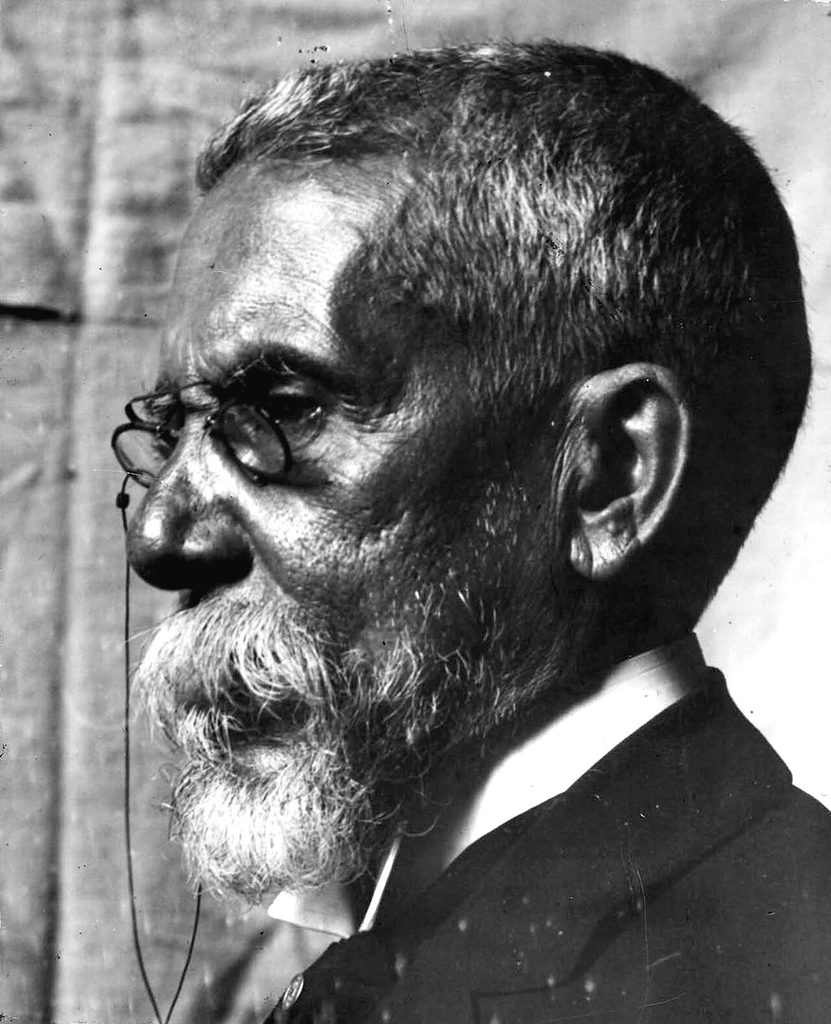
Machado de Assis made this point well in his celebrated essay Instinto de Nacionalidade (1873). Works that aspire to be national cannot settle for imitating the classics by replacing “Ulysses” or “Odysseus” with “Caramuru,” or by relocating Proteus and Tristan to the shores of Salvador. A “national literature” must absorb the substance, not just the outward features, of Brazilian, Colombian, French, German or any other experience of belonging. Myths and legends try, to some extent, to distill that essence, that “national spirit,” and pass it on to the next generations. The point is to give them common ground so that they can see themselves as one people, sharing a language and finding legitimate representation for their interests in a single state.
Put another way, suppose I travel to Colombia and the Itamaraty, Brazil’s Ministry of Foreign Affairs, issues a statement condemning the Colombian national team because one of its players supposedly struck and injured a Brazilian player. Purely hypothetical, of course. Suppose further that, in the next match, the Brazilian team, missing that player, who happened to be its top scorer, suffered the worst humiliation in its World Cup history… As a Brazilian, I would certainly be asked about it. Forgive the digression. Football is still a sore subject for me.

I would rather not turn these pages into a tragic sports column or a dense treatise on literary theory, though the second path would be fruitful given the close ties between literature, and perhaps oral literature too, and the idea of a nation. Let us take another route. The connection I am making between literature and national identity should be clear by now. It probably was before you started reading. Still, one particularly Brazilian legend, if you will allow me that poetic use of the adverb, deserves our attention. It has much in common with stories told in other countries and seems, beyond questions of nationality, to speak to our relationship with the land, with the natural world we came from and will return to when we die. Let us set that last point aside, though. We are still young.
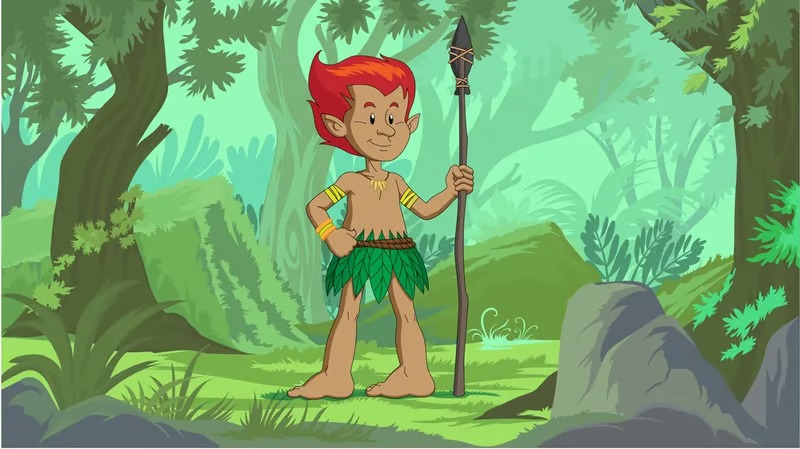
I mean the Curupira, a supernatural being with backward-facing feet who protects nature and animals from those who exploit them, from invaders and land grabbers, and from anyone who threatens the forest or the people who live there in harmony with their surroundings. This story of Indigenous origin was first written down by the Jesuit José de Anchieta, a celebrated religious figure in Brazil whose name has been given to avenues, schools and even a foundation with a television network.

Recognizable by his blazing red hair, the Curupira roams the woods and torments those who take more from nature than they need or kill animals tending their young. His backward feet throw anyone who tries to track him off the trail, leading his pursuers back to the same spot again and again. When he senses danger, he lets out a piercing, terrifying whistle that can disorient them or even drive them mad. His “fire-colored” hair suggests a cleansing power. He is the guardian we need if we are to go on living in harmony with the natural world that sustains us. He also embodies everyone who wants to preserve the forest’s balance, a forest whose true masters would be the people who look after it. You may already see where I am going.
Coincidence or not, this ecological sensibility, tied to national identities and often drawn from Indigenous or rural traditions, finds its way into the symbols of folklore. It celebrates natural wealth and harmony with the environment while awakening in children a sense of justice and respect for the forest, if perhaps less respect for the people who live there. But that is another question. We find the same pattern in the myths of other countries, including Colombia and France, where these stories likewise draw on the ethnic inheritances out of which nations were formed. Let us look at a few examples.
The duende of the Colombian forests has no comparable peculiarity in its lower limbs. Even so, it unsettles those who venture into the woods and, for all its amorous disposition, can turn violent. The Amazonian Boraro, from the traditions of the Tucano peoples, does share the Curupira’s anatomical anomaly, or advantage. Its gigantic stature contrasts with the childlike appearance of its Brazilian counterpart, yet both are depicted as protectors of the forest.
In overseas France, in French Guiana, thanks to which Brazil is, let us remember, the country that shares France’s longest border, we meet the Maskilili. He is more mischievous and more kindly disposed than his Brazilian counterpart. He sometimes even helps travelers who have lost their way. Admittedly, the Curupira is only a child charged with watching over vast stretches of forest. He does not always have time to help people who come bothering him. I am joking, of course. A literary project spanning national borders has even proposed bringing the Maskilili and the Curupira together.
Lest we forget Europe, there is also the Basajaun, lord of the forests in Basque mythology, of pagan origin, whose cultural territory extends into part of France. Less violent than the South American figures, he may be closer to the Colombian duende. Finally, there are the French Anes, also keepers of the secrets of the forest and its flora and fauna, though more peaceable than I would like. Another joke.
In any case, and this time I really will conclude, stories from different countries, national traditions and even continents shape how we see the world, within nations and across civilizations. In doing so, they must reckon with the natural dimension of human existence. They cannot escape it, and if they do, they ought not to. Many other dimensions also deserve our attention. But one fact remains: whether we are Brazilian, Colombian, French or of any other nationality, we are first of all human beings, part of nature. Let us keep that in mind, especially in an age marked by so many environmental disasters and upheavals. Whether we speak mineirês, Portuguese, Spanish, the speech of Santander, French or Provençal, we all live on the same planet.
I think here of a teacher dear to me who died too soon, Juliana Carolina de Melo Carvalho. She used to say something in Brazilian Portuguese that I hope I can do justice to: “The planet has no room tacked on out back.” (O planeta não tem puxadinho)
Finally, if you would like to think further about myths and legends, where they come from, and how they help build the future by shaping the children who will build it, you will find a book on Latin American myths and legends to explore on this site.