

There are books we read. And then there are books we listen to.
But there is another experience again, slightly different: hearing a writer read his own work aloud. The voice is no longer that of an actor interpreting a text. It is the voice of the man who imagined it, wrote it, corrected it, sometimes rewrote it over months or years. He knows every sentence. He knows what he meant to say — and perhaps also what he chose not to say.
With L’Étranger (published in English as The Stranger, or The Outsider), this experience takes on a particular dimension, because we can hear Albert Camus lend his own voice to the text and, indirectly, to Meursault. And something happens. A novel we thought we knew takes on another rhythm. The short sentences turn drier. The silences take up more room. Certain phrases we would spontaneously have loaded with emotion are spoken almost plainly. And that plainness can be more unsettling still. When an author reads his own work aloud, one question becomes especially interesting:
What does his voice teach us that the page does not?
Albert Camus: a short life and an immense body of work
Albert Camus was born on 7 November 1913 in Mondovi (today Dréan), in an Algeria then under French rule. His Algerian childhood and youth would leave a deep mark on his imagination: the light, the sea, the heat, the Mediterranean landscapes — but also the social and political realities of colonial Algeria run through an essential part of his work. L’Étranger appeared in 1942. The Myth of Sisyphus appeared the same year. Camus rose quickly to considerable fame. The Bibliothèque nationale de France notes that the publication of L’Étranger in 1942 truly marks his arrival at literary celebrity. He was also a journalist, and took part in the Resistance, notably through the newspaper Combat. Fifteen years later, in 1957, Albert Camus received the Nobel Prize in Literature. He was only 44. The Nobel committee singled out the importance of his literary output and the way it examined the great problems of the human conscience of his time.
Barely three years later, on 4 January 1960, Albert Camus died suddenly in a car accident. He was 46. That death gives the recordings of his voice a particular resonance today. We are no longer simply hearing a famous writer read his novel: we are hearing a voice that is gone, preserved on tape, still bringing his text to life more than sixty years after his death. And in the case of L’Étranger, that voice matters enormously.

Read L’Étranger, or hear Camus read it?
From the opening pages, L’Étranger imposes a language of its own. Everything seems simple. The sentences are often short. Events are recounted with a remarkable economy of words. Meursault describes what he sees, what he does, what he feels physically. He rarely describes his emotions and almost never tries to justify them. That distance is one of the novel’s great strengths. Yet when we read silently, our brain is constantly adding something to the text: an intention, an emotion, an irony, a disquiet. We create our own Meursault.
But when Camus reads his own text, another proposition appears. We hear his pace. His pauses. His articulation. The words he does — or does not — give particular weight. The question is therefore not whether Camus’s reading is the only possible interpretation of L’Étranger. That would be a mistake. A published work belongs to its readers too, and a literary reading is never reducible to its author’s supposed intention.
Hearing Camus is, on the other hand, an exceptional document. We can set our inner reading against his own way of sounding out his sentences. And it is precisely that confrontation which makes the whole thing fascinating.

Camus’s voice and the strange closeness of Meursault
Meursault is one of the most famous characters in twentieth-century French literature. He is also very easy to misread. One can want to explain his behaviour straight away. To condemn him. To defend him. To look for a hidden psychology behind every sentence. Camus’s voice partly resists that temptation. It does not constantly try to tell us what we ought to feel. That restraint produces a strange effect: the barer the reading seems, the stronger certain scenes become.
This becomes particularly noticeable in the second half of the novel. Meursault is in prison. His world narrows. The outside world, the habits, the sensations and the freedoms that until then had seemed almost self-evident gradually disappear. The cell, the waiting, the trial and the prospect of death transform the character’s relationship to time. At that point, listening rather than simply reading brings something very particular. The reader’s time almost joins the prisoner’s time. You can no longer let your eyes race down the page. The voice imposes its rhythm. You have to wait for the next sentence. Then the one after that. The silences genuinely exist. And in a text where waiting and the awareness of death become essential, that detail is not trivial. Literature briefly stops being only a printed text. It becomes a voice again.

A text we no longer read exactly as we did in 1942
It would however be artificial to speak of L’Étranger today without recalling the context in which the novel was written and published. The story takes place in colonial Algeria. The man Meursault kills is not named. In the novel, he remains designated as “the Arab”. For a twenty-first-century reader, that choice obviously cannot carry exactly the same resonance as it did in 1942. Our knowledge of colonial history, of the Algerian War, of decolonisation, and today’s debates about the representation of colonised peoples have deeply changed the way we look at it. This does not mean the novel should be judged solely by present-day values and criteria. On the contrary, it means it should be read precisely: within its own time and from ours. Both viewpoints are needed. Making the colonial context disappear would impoverish the novel. But reducing L’Étranger to that single question would be just as inadequate. That is probably one of the reasons great works go on being read: they do not stand still. Each era puts new questions to them. And sometimes a voice recorded several decades ago obliges us to listen to them differently again.
In prison, the voice takes on another dimension
It is probably in the second half of L’Étranger that listening becomes most striking. Meursault is now locked up. His world has narrowed abruptly. There is no more beach, no more light, no more moving about Algiers or daily encounters. There is the cell, the waiting, the memories and this new experience of time: a time he no longer controls. In a printed book, the reader stays master of the pace. He can speed up, go back, skip a few lines or stop reading. With an audiobook, that relationship changes. The voice imposes a duration. You have to wait for the end of the sentence. Then the next one. And when the book is L’Étranger, that constraint almost becomes a way of entering Meursault’s experience. Confinement is also confinement within time.
Camus does not, however, suddenly turn his character into a tragic hero. The language keeps the soberness that has marked the novel from the start. It is precisely that contrast which makes certain passages so powerful: events grow more and more serious, but the writing refuses grand effects. Heard aloud, that restraint is immediately perceptible. Camus does not seem to be looking to dramatise each of his sentences. He lets the text move forward with a kind of simplicity that can at times be more disturbing than a theatrical performance. That is where hearing the author himself becomes fascinating. Not because his reading would give us the “right” interpretation of Meursault. But because it shows us how Camus makes the language he wrote actually sound.
A voice facing death
Little by little, the question of death becomes central. It was already there from the opening of the novel. But in prison it changes in nature: it stops being only the death of others. Meursault must now contemplate his own. Waiting for the execution confronts the character with something he can no longer sidestep: a human life has an end. That reflection connects directly with one of the great questions running through Camus’s work. L’Étranger appeared in 1942, the same year as The Myth of Sisyphus, two texts associated with what Camus himself built as the “cycle of the absurd”. Gallimard, his publisher, presents L’Étranger as a work closely bound up with that questioning of the absurd.
But the word “absurd” is sometimes used too easily when speaking of Camus. It does not simply mean that “life has no meaning” or that everything is pointless. The question is more complex: human beings look for meaning, coherence and answers in a world that does not necessarily supply them. And in Meursault’s cell, that confrontation becomes concrete. It is no longer only a philosophical idea. It is a man waiting. A man who knows he is going to die. That is also why the voice takes on a particular importance here. Reading a reflection on death is not quite the same as hearing it spoken by a human voice. And today that experience gains a further dimension when the voice is Albert Camus’s. Listening to a man who will also disappear. When Camus recorded his reading of L’Étranger, he was still a writer in full activity. A few years later, in 1957, he received the Nobel Prize in Literature. The Swedish Academy honoured his work for the way it illuminates, with clear sight, the problems of the human conscience of his time.
Hearing the French language differently
For people learning French, this kind of listening holds yet another interest. A written text shows us the words. A voice shows us how those words live together. In French, we do not simply pronounce a succession of isolated words. Words cluster. Rhythm organises the sentence. Certain syllables are brought out more than others. Linking, liaison, pauses and intonation all contribute directly to understanding. Listening to a literary work is therefore also a way of hearing the language in motion. And with Camus the experience is particularly interesting, because his writing often looks simple. The vocabulary is not always spectacular. The sentences can be very short. But simplicity does not mean poverty. Quite the opposite. When a sentence is stripped right down, the smallest change of rhythm can take on considerable importance.
That is precisely one of the principles we stand by at Éditions Las Casitas: to understand and master a language, it is not always enough to look at it written down. You have to hear it too. That relationship between spelling, sounds, rhythm and understanding is what we develop in our book on French pronunciation. But literature lets us go further still. It reminds us that a language is not only a system of rules. It is also a voice.
So should you read L’Étranger, or listen to it?
Why choose? You can read a few pages. Then listen to them. Come back to the text. Compare. Hear a sentence you had understood one way and discover that, in Camus’s voice, it produces an entirely different effect. That is perhaps where the real richness of the experience lies. The recording does not replace the book. It opens another door into it. And for anyone who sometimes finds it hard to stay in front of a book for long, or who simply prefers hearing a story to reading it silently, an audiobook can also reconcile you with works you gave up on too quickly.
With L’Étranger we have, in addition, that rare piece of luck: we can hear the text in the voice of the man who wrote it. So if you already know the novel, try hearing it. And if you have never read it, perhaps you can begin differently. Close the book for a moment. Put your headphones on. And let Camus tell you about Meursault.
Listen to L’Étranger
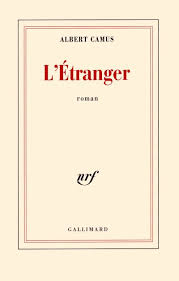
If the idea appeals to you, the audio version of L’Étranger read by Albert Camus is available on Amazon.
This is an affiliate link: if you make a purchase through it, Éditions Las Casitas may receive a small commission, at no extra cost to you.
Listen to L’Étranger read by Albert Camus on Amazon
Books have a voice
With this series, Éditions Las Casitas invites you to discover literary works in a different way: by listening to writers read their own texts.
Because a book has words.
But sometimes we are also lucky enough to know its voice.